Age Verification
You must be 21 years or older to view this site.
Are you 21 or older?
You must be 21 years or older to view this site.
Are you 21 or older?
Sorry, you must be 21 or older to view this site.
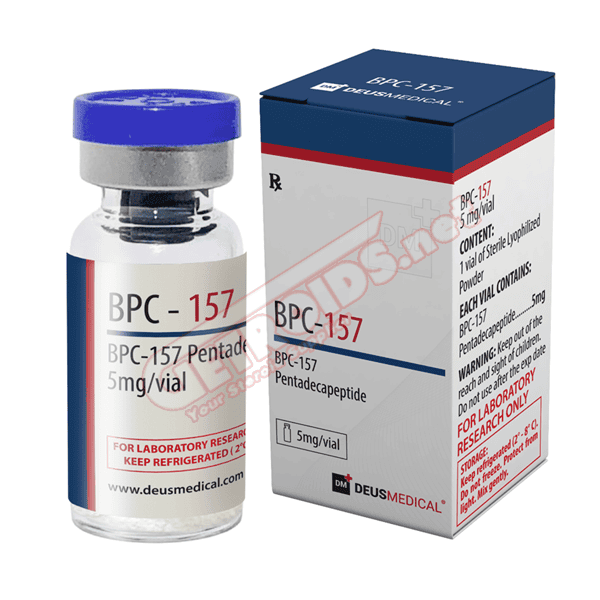
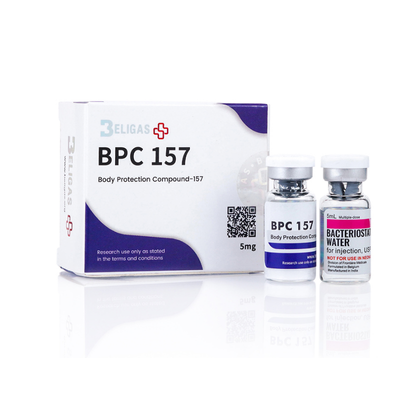
Active Component: BPC-157 Pentadecapeptide (5 mg/vial)
Manufacturer: Deus Medical
Pack: 1 Vial x 5 mg
BPC-157, or "Body Protect Compound," is a naturally occurring peptide—a stable gastric pentadecapeptide—originally found in trace amounts within human gastric juices, where it serves to protect and heal the intestinal tract. When synthesized in a super-concentrated form, it demonstrates extremely high biological healing activity across various bodily systems.
Its long chemical name reflects its fifteen amino acid sequence, which remains stable even in harsh conditions, allowing it to exert anabolic healing effects in both the upper and lower GI tract.
Extensive research, largely conducted in rodent models since 1991, has shown BPC-157 to be remarkably effective in the repair and regeneration of numerous tissues with a favorable side effect profile.
Tendon and Ligament Healing: It promotes the healing of tendons (e.g., Achilles tears) and ligaments (e.g., damaged medial collateral ligaments) by stimulating tendon growth, cell survival, and cell migration. It is shown to promote healing from tendon to bone.
Muscle and Bone Repair: BPC-157 reverses systemic corticosteroid-damaged muscle healing and promotes bone healing in models with segmental defects.
Wound Healing: It accelerates general wound healing and, through interaction with the Nitric Oxide (NO) system, promotes angiogenesis (new blood vessel formation).
GI Tract Protection: It provides powerful ulcer-preventive effects and repairs damage from inflammatory bowel disease (IBD) within days after administration.
Painkiller Damage: It effectively eliminates the harmful effects of common painkillers on the gastrointestinal tract.
While BPC-157 is widely researched, standardized human clinical doses are still being established.
Research Dosage: Systematically effective doses are shown to range between 1–10 mcg per kilogram of body weight once a day, which usually translates to 200 mcg to 800 mcg total daily.
Anecdotal Dosage: Many users report success with doses of 250–350 mcg twice a day, totaling 500–700 mcg daily.
Non-Patentable Status: Because BPC-157 is a natural peptide, it cannot be patented. This lack of financial incentive explains why it is not marketed to doctors and is not approved by the FDA as a drug for human use.
Research Status: There have been no long-term human studies to date, and 90% of the studies originated from one initial Croatian clinical study.
WADA/USADA Status: While some peptides are banned, BPC-157 is not currently listed as an illegal compound by organizations like WADA or USADA. Users should be aware that this status can change.
BPC-157 has not received FDA approval because it is a naturally occurring peptide and therefore cannot be patented. Without patent protection, major pharmaceutical companies lack the financial incentive to invest hundreds of millions of dollars into the mandatory, large-scale, long-term human clinical trials required for drug approval.
While BPC-157 is stable in gastric juice (making oral administration possible for GI tract issues), it is generally considered more systematically effective when injected (subcutaneously or intramuscularly). Injections deliver the super-concentrated peptide directly into the system or near the site of injury for maximum localized biological healing activity.
The difference lies in the formulation's stability. While BPC-157 is known as the stable gastric pentadecapeptide, the Arginine salt form (BPC-157 Arg) is a newer version designed for even greater stability and bioavailability, particularly in acidic environments or when stored as a powder.
The risk, though not fully established in human studies, lies in its ability to stimulate angiogenesis (new blood vessel formation) and cell growth. If an individual has undiagnosed or existing cancerous conditions, the component's regenerative action could theoretically promote the growth or spread of cancer cells. For this reason, anyone with a history of cancer should strictly avoid its use.